
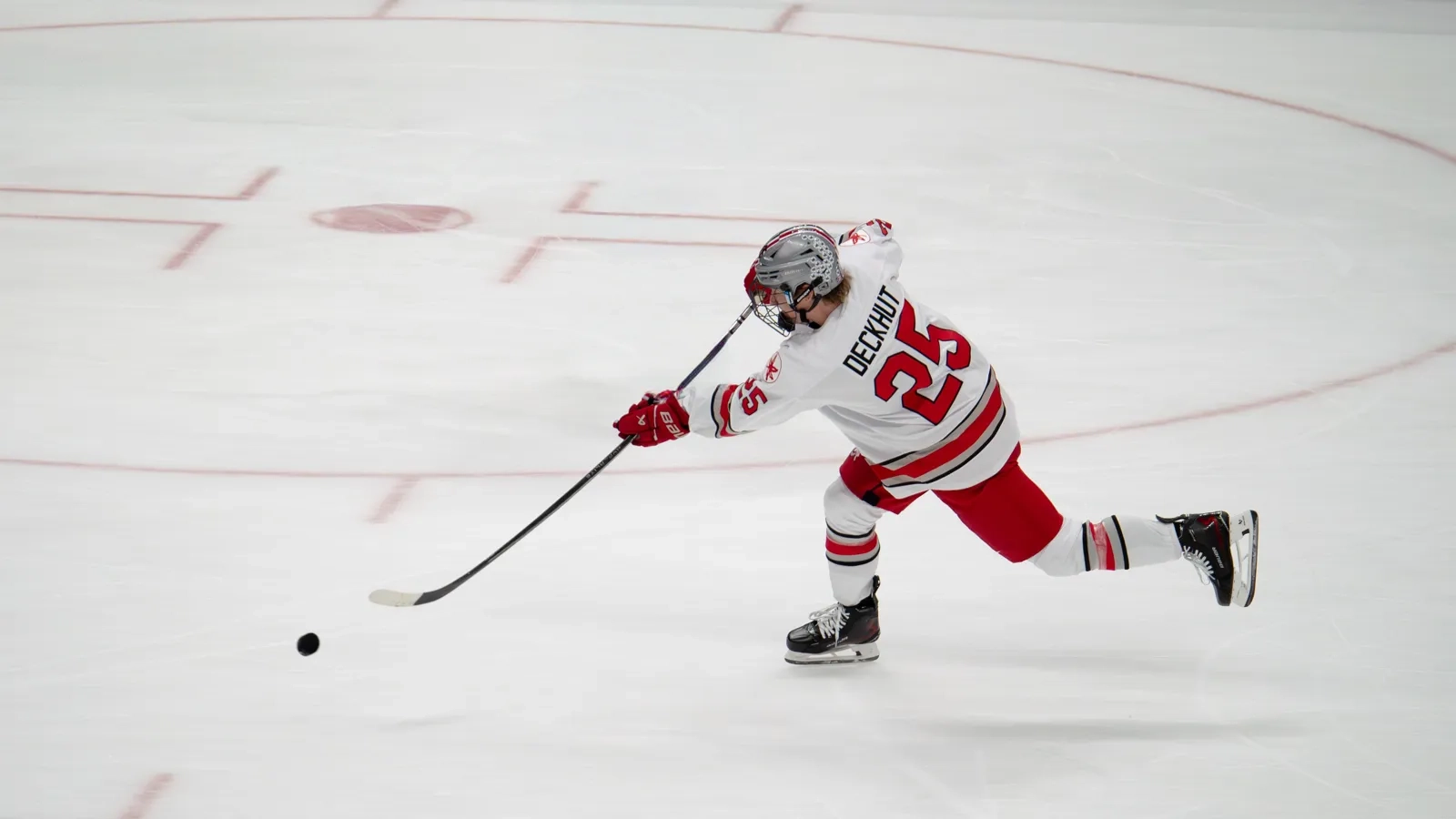
First, which hockey player?
Search for this topic online and you will find a wall of romance novels about brooding NHL stars, plus tabloid lists of famous players' partners. Neither has much to do with real life. The United States has a huge number of people who play hockey, and almost none of them are professionals. When Americans date a hockey player, they usually mean one of these:
- Adult league players. Teachers, electricians, nurses and software engineers who skate one to three nights a week in a recreational league. This is by far the most common kind.
- College players. NCAA Division I, II and III athletes, plus a larger crowd playing club hockey through ACHA programs.
- Junior and minor league players. Young players in the USHL or NAHL hoping for a college scholarship, and pros in the AHL, ECHL or SPHL.
- Coaches and referees. People who spend their evenings at the rink in a different role.
- Former players. Anyone who played seriously as a kid and still treats the sport as part of who they are.
Each brings a different schedule and a different set of challenges. The advice below applies broadly, with notes where the type matters.
The schedule is the relationship's first test
Hockey players live by ice time, and ice time is scarce. Rinks rent slots from early morning until well past midnight, and adult leagues often get the leftovers. A beer leaguer might play at 10:30 p.m. on Wednesday one week and 8 p.m. on Sunday the next. Tournaments can take a full weekend. College players have practice, lifting, film and travel on top of classes. Junior and minor league players may move cities every season.
What helps:
- Ask for the schedule early. Most leagues publish game times weeks in advance. Knowing them lets you plan around games instead of colliding with them.
- Protect one regular night. Pick an evening that is always yours, no matter what the league does.
- Go to a game now and then. Watching from the bench side of the glass, coffee in hand, shows interest without demanding much. Many adult leagues welcome spectators, and the stands are rarely crowded.
Gear, smell and the bag in the hallway
It is a running joke for a reason. Hockey gear absorbs sweat and smells terrible if it is not aired out. Expect a large bag, sticks leaning in a corner and pads drying somewhere in the apartment after every game. A player who hangs gear to dry, washes base layers and uses a gear deodorizer is showing consideration. One who leaves the bag zipped in a hot car trunk for a week is not. It is fair to talk about this early, before you move in together.
Injuries are part of the deal
Hockey is a contact sport even in leagues that ban checking. Pucks, sticks, boards and other skaters all cause injuries. Bruises, stitches, sore shoulders and the occasional broken finger come with the territory. Some players keep playing through pain because they do not want to let the team down. A supportive partner can encourage them to see a doctor, take time off when needed and wear the right protection. Do not try to talk them out of the sport entirely; you will probably lose that argument.
The team is a second family
Hockey teams are tight. Beer league teams often have the same core for years, and the postgame beer in the parking lot or the bar down the road is part of the ritual. College and junior teams are even closer. Expect your partner's teammates to become a fixture in your life, and expect to be introduced to them early. You do not need to become one of the guys, but showing up to a team barbecue goes a long way.
If your partner plays on a co-ed team, the social side may look a little different, with more mixed groups and partners on the roster. Our guide to beer league dating goes deeper on adult league culture.
Dating a college or junior player
Younger, more competitive players have less control over their time. Coaches set schedules, travel is required and school or billet families add another layer. Junior players in particular may only be in a city for one season. If you date one, expect long weekends apart, video calls from hotel rooms and a calendar that changes at short notice. Be honest with yourself about whether that works for you. Many couples manage it, but it helps to go in with open eyes.
What about the NHL?
It is fine to have a crush. It is unrealistic to plan a love life around meeting an NHL player. There are only around seven hundred roster spots in the league at a time, players travel constantly in a long regular season, and most meet partners through friends, family or school long before they reach the league. Anyone online who promises to introduce you to pros is likely running a scam. Our trust and safety page covers these.
How to meet a hockey player
If you want to date someone who plays, go where players are:
- Public skating and stick-and-puck sessions. Many rinks hold them, and regulars get to know each other.
- Learn-to-play programs. Plenty of rinks run adult beginner clinics. You will meet other beginners and the experienced players who coach them.
- The rink bar or restaurant. Many arenas have one, and postgame crowds gather there.
- Fan clubs and watch parties. Fans who play often show up for big games.
- A hockey-first dating site. Here, players can say so in their profile, and you can filter for people near you. Signup Here to see who is in your area.
How to get a hockey boyfriend or girlfriend
The phrase pops up a lot online, often next to merch and aesthetic photos. In real life it is simpler. Show genuine interest in the sport, ask good questions and respect the time it takes. People who play care about their game, and a partner who asks how it went, remembers who they played and comes to the occasional game stands out. You do not need to be an expert. You just need to be curious.
Things that really help
- Learn the basics. Offside, icing and the penalty box. Ten minutes on the rules makes watching far more fun. If your date is new to the sport, the non-fan guide explains icing and offside in plain words.
- Respect the routine. Players often have pregame rituals, like a certain meal or a nap. Let them have it.
- Celebrate small wins. A first goal of the season in a C-division league still matters.
- Have your own life. The best partners have hobbies and friends of their own, so game nights feel like a chance to do their thing too.
Things that do not help
- Making them choose between you and the team.
- Treating a lost game like it is not a big deal, or like it is the end of the world.
- Comparing them to NHL players. Nobody in a Thursday league wants to hear it.
- Wearing a rival jersey to their game without warning. Save that for when you know them well. Our guide to dating a rival fan has more.
When the season ends
Most adult leagues break for a few weeks in spring or summer, and competitive players have an off-season too. That is often when hockey relationships get to breathe. Plan trips, try summer activities and spend time together without a schedule hanging over you. Then, when September comes, the gear bag goes back in the hallway and the cycle starts again.
A starting point
If you would like to meet a player, or you are one and want a partner who understands, starting with a profile here costs you only a few minutes. Build a profile, say what you are looking for and see who writes back. Returning members can sign in to update their details for the new season.