
You are far from the only mixed couple
Lots of Americans grow up with no hockey around them at all. In much of the South and West the sport barely appeared on local TV until recently, and many schools never had a team. So if you fall for someone who thinks a power play is a business term, you are in good company. Many long, happy hockey relationships pair one devoted fan with one person who simply does not care.
The key is that "does not watch" is different from "does not respect." A partner who is happy for you to have your game nights, and maybe tags along for a few, is a great match. A partner who resents the sport, or one you constantly try to convert, is a harder road.
Start with why you love it
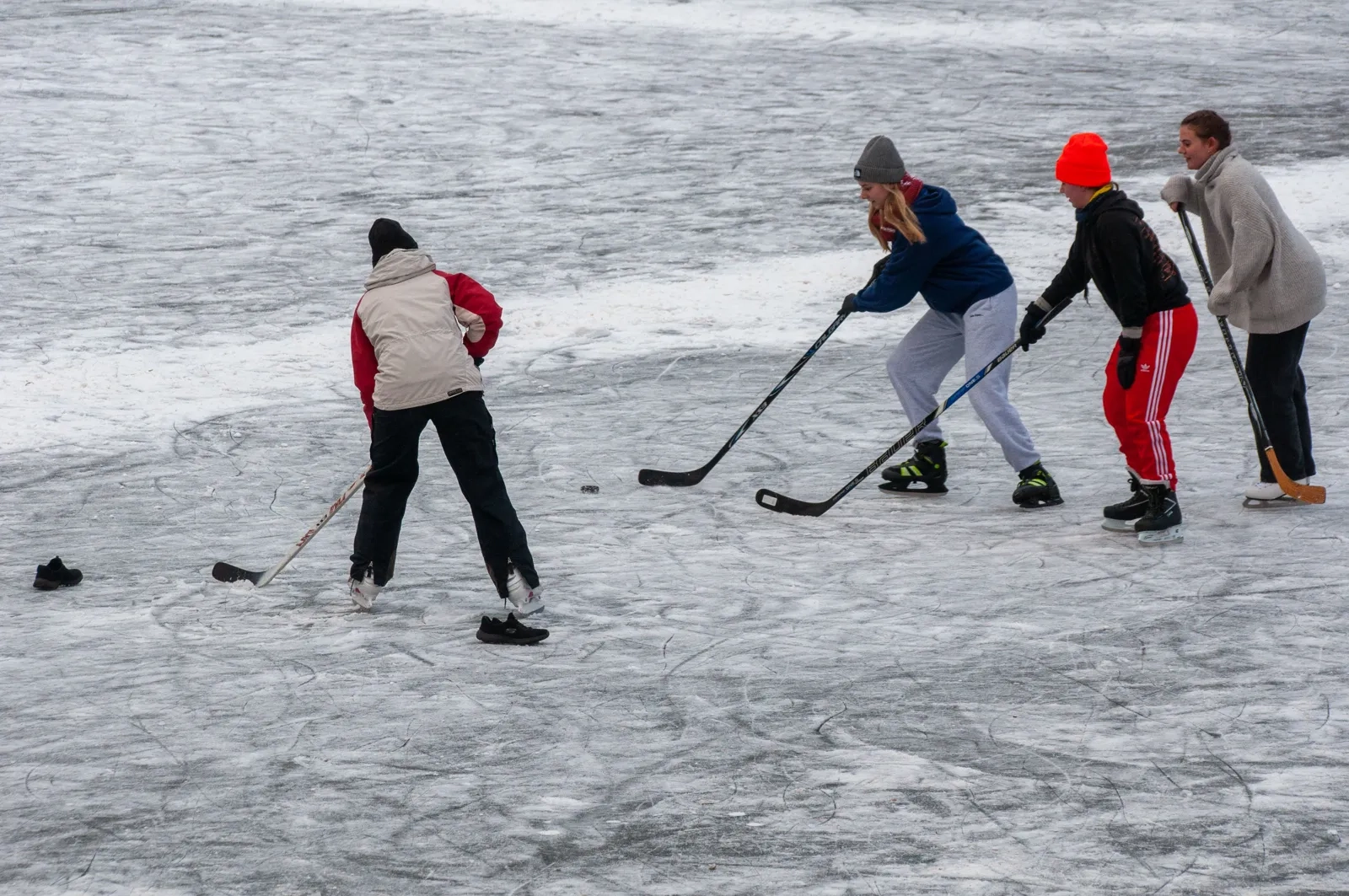
Before you try to explain hockey, explain yourself. Why does it matter to you? Maybe you grew up skating on a pond in Wisconsin with your grandfather. Maybe your college team was the center of campus life. Maybe the Stanley Cup run when you were twelve was the happiest month of your childhood. Stories like these help a non-fan understand that hockey is about memories and people, not just a puck.
Their first game
Choose the first game carefully. Here is what tends to work:
- Go minor league or college before the NHL. Tickets cost less, seats are closer and the atmosphere is relaxed. Many AHL and ECHL teams run theme nights, from jersey auctions to promotional giveaways, that make the evening fun even for someone who does not follow the play. College games bring a student section, a pep band and a lot of noise.
- Sit low if you can. From near the glass, the power of every stride and hit is obvious. From high up, the game can look like small dots sliding around.
- Pick a short commute. Three hours of hockey plus two hours of traffic is a lot to ask of someone new.
- Eat well. Arena food is part of the experience. Find out what the building is known for.
- Do not narrate every shift. Explain the basics as they come up, then let them enjoy it.
The rules in plain words
You do not need to teach everything. These five ideas cover most of what happens on the ice.
- The goal. Two teams try to shoot a puck into the other team's net. Most goals in the score.
- Periods. A game has three twenty-minute periods with breaks in between. If it is tied, there is overtime and sometimes a shootout.
- Offside. An attacking player cannot cross the blue line into the other team's zone before the puck does. It is why play stops even when nobody seems to have done anything wrong.
- Icing. If a team shoots the puck from its own half all the way past the other team's goal line, play stops and restarts in their end. It prevents teams from just clearing the puck to waste time.
- Penalties. Break a rule, such as tripping or hooking, and you go to the penalty box for two minutes while your team plays a player short. That advantage for the other team is called a power play.
That is enough to follow a game. Fighting, line changes and the rest can wait.
Make game nights fair
The hardest part is usually time, not interest. Hockey has a long season and a lot of games. Some approaches that work:
- Agree on the big ones. Pick a handful of games, such as rivalry nights or playoffs, that you watch in full. Catch highlights of the rest.
- Give them a reason to stay. If you are watching at home, make it an event with good food, a blanket or friends over. If they would rather read in the next room, that is fine too.
- Use headphones or a second screen. For regular season games, you can watch without taking over the living room.
- Trade. If they sit through a game with you, you go to the thing they love, whether that is a farmers market, a concert or a baking show marathon.
When they become a fan anyway
It happens a lot. Someone who was indifferent goes to a few games, picks a favorite player and suddenly has opinions about the power play. If that happens, enjoy it. If it does not, that is fine too. Some people never get into it, and a relationship does not need them to.
When it matters more than you thought
Sometimes a fan realizes they want a partner who shares the sport. That is a reasonable thing to want, and it is better to admit it early than to hope someone changes. A hockey-first dating site can help you meet people who already care. Even then, plenty of fans are casual about it and glad to explain the basics.
Things to avoid
- Quizzing them on the rules.
- Getting angry at them when your team loses.
- Scheduling important plans, like meeting their parents, around a game without asking.
- Mocking other sports or hobbies they love.
- Assuming they will want to come to every game.
What they can do
If you are the non-fan reading this, a few small gestures go a long way:
- Learn the name of your partner's team and one or two players.
- Ask how their league game went.
- Come to the occasional game, even a beer league one with a coffee in hand.
- Let them have their rituals without teasing them too much.
Watching the women's game
The PWHL has given US fans a new way into the sport. Games tend to feel friendly and family-focused, tickets are often easier to get than NHL seats and the play emphasizes skating and passing more than hitting. For a partner who finds big-league crowds overwhelming, a pro women's game can be a lovely introduction. It is also a fine date for two fans who want something different from the usual NHL night.
What success looks like
Success is not converting your partner into a superfan. It is a relationship where hockey has a comfortable place, where nobody feels left out or pushed into anything, and where you can enjoy the sport without guilt and they can enjoy their own interests without pressure. Plenty of couples get there.
Meeting a match who fits
Whether you want a partner just as hooked on the game as you are or someone who is simply happy for you to have it, being clear in your profile helps. Say how much of the sport you would like to share. Signup Here to build a profile that says so. For more ideas, see our hockey date ideas or the hockey widow guide on sharing a long season.